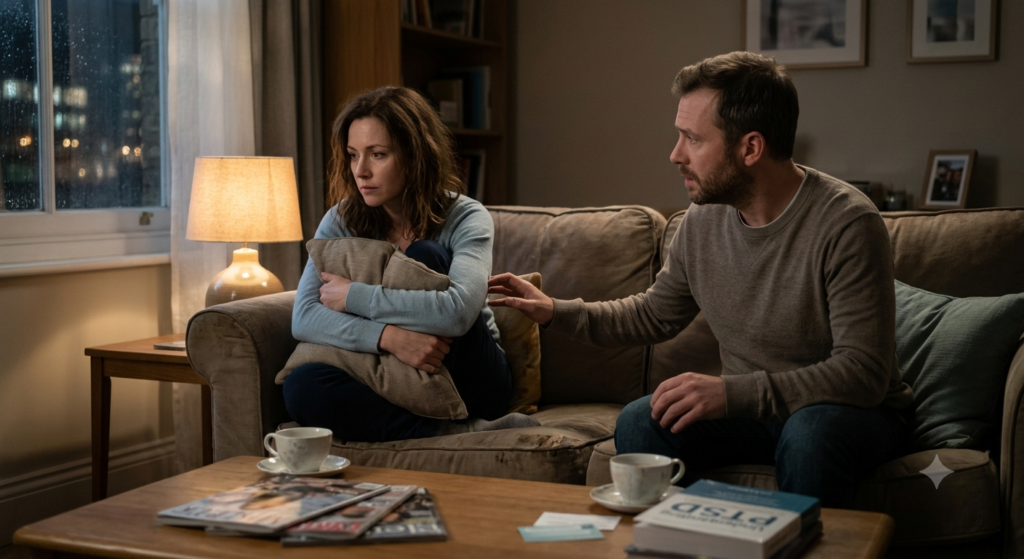
You may want to feel close to someone you care about, yet find yourself pulling away when conversations become emotional or disagreements arise. You might struggle to trust a partner, feel uncomfortable with vulnerability, or have difficulty explaining why certain situations feel overwhelming. These experiences can be confusing for both people in a relationship.
Post-traumatic stress disorder (PTSD) can affect how a person experiences safety, closeness, and communication after trauma. Its effects may appear in romantic relationships, friendships, and family connections. Understanding these patterns can help people respond with greater awareness, establish healthy boundaries, and explore ways to rebuild emotional connection.
How PTSD Can Affect Relationships
PTSD can affect relationships through symptoms such as avoidance, emotional numbness, heightened alertness, and irritability. These reactions may influence how someone responds to affection, conflict, or situations that remind them of a traumatic experience.
For example, a person may withdraw during a disagreement because they feel overwhelmed. Their partner might interpret that withdrawal as rejection or a lack of interest. In another situation, someone who remains alert to possible danger may find it difficult to relax and feel secure, even when their partner intends to offer reassurance.
Over time, these misunderstandings can create distance between people who genuinely care about each other. One person may seek more reassurance, while the other needs space to manage distress.
However, relationship difficulties do not automatically indicate PTSD. Stress, previous relationship experiences, and other factors can also affect emotional connection. Recognizing recurring patterns without making assumptions about their cause is an important first step toward understanding what is happening.
Why PTSD Can Make Trust Difficult
Trust often involves feeling safe enough to be vulnerable, depend on another person, and believe that your needs will be treated with respect. After a traumatic experience, these things may become more difficult.
A person with PTSD may become more sensitive to possible threats, rejection, or reminders of past harm. They might question another person’s intentions, struggle to accept reassurance, or feel uneasy when someone gets emotionally close. Experiences involving betrayal, abuse, or interpersonal violence can also influence how someone approaches future relationships.
These reactions do not necessarily mean a person does not care about their partner. They may reflect difficulties feeling safe or managing trauma-related distress.
Rebuilding trust usually requires patience and consistent behavior rather than repeated promises. Following through on commitments, respecting boundaries, and communicating honestly can help create a more predictable relationship environment.
At the same time, trust should not be forced. A person deserves the time and space to decide what feels safe for them, and both partners have the right to establish reasonable boundaries.
How PTSD Affects Emotional and Physical Intimacy
Emotional intimacy develops when people feel comfortable sharing their thoughts, feelings, fears, and needs. PTSD can sometimes make this vulnerability challenging.
Someone may avoid discussing painful experiences, feel disconnected from their emotions, or struggle to express affection. Others may want closeness but become uncomfortable when a relationship starts to feel emotionally intense. These experiences can leave both partners wondering how to reconnect.
PTSD may also affect physical intimacy. Touch, particular environments, or certain forms of closeness can sometimes remind a person of past trauma. This may lead to discomfort, anxiety, or a desire to pause physical contact.
Partners should approach these situations with communication and respect rather than pressure. Asking what feels comfortable, respecting consent, and discussing boundaries can help both people understand each other’s needs.
Emotional and physical closeness do not need to return on a fixed timeline. Small, mutually comfortable moments of connection can be meaningful steps toward rebuilding intimacy.
How PTSD Can Create Communication Problems Between Partners
When PTSD-related distress affects communication, ordinary disagreements can sometimes feel more intense. One person may become defensive, withdraw from the conversation, or react strongly to something that feels threatening. The other may respond by pushing for answers, becoming frustrated, or interpreting silence as indifference.
This can create a cycle in which one partner seeks reassurance while the other pulls away, leaving both feeling misunderstood.
Changing how a conversation begins can sometimes help. Instead of saying, “Why do you always shut me out?” a partner might try, “I can see this conversation is difficult for us right now. Would a short break help us come back to it?”
A pause can give both people time to manage their emotions, but it helps to agree on when to resume the conversation so that important concerns are not ignored.
Using clear, non-blaming language and listening without immediately trying to solve the problem can also make communication more constructive. Learning practical conflict resolution strategies may help individuals recognize unhelpful communication patterns and approach disagreements more thoughtfully.
How to Rebuild Trust and Emotional Connection
Rebuilding connection after trauma-related relationship difficulties takes time. There is no single approach that works for every person, but several practices can help partners create a healthier foundation.
1. Communicate needs without blame. Describe your feelings and needs as clearly as possible. For example, “I feel disconnected when we stop talking after an argument. Can we discuss how to handle those moments?”
2. Build trust through consistent actions. Keeping promises, being honest, and following through on agreements can create a greater sense of reliability over time. Small, repeated actions often matter more than grand gestures.
3. Respect boundaries and consent. Neither partner should feel pressured to disclose traumatic experiences, offer physical affection, or move faster than they are comfortable with. Respecting boundaries helps preserve emotional safety.
4. Agree on ways to manage conflict. Discuss what each person can do when a conversation becomes overwhelming. This might include taking a short break, using calming strategies, and agreeing to return to the issue at a specific time.
5. Recognize progress without expecting perfection. Some conversations may go well while others remain difficult. Acknowledge constructive changes and approach setbacks with curiosity rather than assuming that progress has been lost.
These steps can support a stronger relationship, but responsibility should not fall entirely on one partner. Both people can contribute to healthier communication while maintaining their own emotional well-being.
It can also help to understand how earlier experiences influence present-day reactions. Learning more about how trauma can affect emotional well-being may provide useful context for people exploring their experiences and considering professional support.
Can Therapy Help With PTSD-Related Relationship Difficulties?
PTSD-related relationship challenges can be difficult to manage alone, especially when avoidance, distress, or recurring conflict begins to affect daily life. Working with a qualified mental health professional may help someone understand their reactions, develop coping skills, and explore how past experiences influence present relationships.
Treatment depends on the person’s symptoms, needs, preferences, and clinical circumstances. A therapist may discuss trauma-focused approaches, emotional regulation strategies, or ways to recognize and respond to triggers. When appropriate and safe, couples-based support may also help partners improve communication and understand recurring relationship patterns.
If trauma-related symptoms are affecting your ability to trust others or maintain meaningful connections, exploring PTSD therapy in Oceanside may help you understand your experiences and identify appropriate support.
Depending on your symptoms and treatment needs, a qualified professional may also discuss EMDR therapy in Oceanside as one possible approach to treating trauma-related difficulties. The suitability of any treatment depends on individual circumstances and professional assessment.
Therapy does not guarantee a particular relationship outcome, and healing does not require someone to remain in an unhealthy relationship. If a relationship involves intimidation, coercion, or abuse, prioritizing safety and seeking appropriate support are essential.
Frequently Asked Questions
Can PTSD make it difficult to trust a partner?
Yes. Some people with PTSD experience heightened alertness, avoidance, or fear related to past experiences, which can make vulnerability and trust more challenging. The specific effects vary from person to person.
Can PTSD affect emotional intimacy?
Yes. PTSD symptoms such as emotional numbness, avoidance, or difficulty feeling safe can sometimes make emotional closeness more difficult. With appropriate support and respectful communication, some people find ways to strengthen their connections.
Can a relationship improve when one partner has PTSD?
A relationship may improve when both partners work toward clearer communication, respect boundaries, and seek appropriate support. Progress varies, and both people deserve emotional and physical safety throughout the process.
Take the Next Step Toward Healthier Relationships
PTSD can make trust, communication, and emotional intimacy more challenging, but these difficulties do not define a person’s ability to form meaningful connections. Understanding trauma-related reactions, respecting boundaries, and practicing consistent communication can help create opportunities for greater connection.
If PTSD symptoms are affecting your relationships or everyday life, professional support can help you explore your experiences and identify appropriate next steps. You do not have to understand every reaction or work through every difficulty on your own.